
On this page
- Why HIIT after 50 is worth considering
- Pre-exercise checklist
- 8-week modified progression for 50+
- Recovery rules for 50+
- Evidence-backed benefits for midlife and beyond
- Medications and monitoring
- Social and adherence factors
- Warning signs to stop and seek care
- Community and coaching cues
- Bone density and balance
- Long-term adherence mindset
- Family and social support
- Strength days around HIIT
- Frequently asked questions
Why HIIT after 50 is worth considering
VO₂ max declines ~10% per decade after 30 unless you train it. For adults over 50, maintaining aerobic capacity correlates with independence, cognitive health, and lower mortality—Peter Attia cites VO₂ max as a vital sign. Structured HIIT like the Norwegian 4x4 can raise VO₂ max efficiently without hour-long cardio blocks.
HIIT is not reckless by default—but it demands respect, medical clearance, and smart progression. Our FAQ addresses common over-50 questions; this guide goes deeper.
Pre-exercise checklist
- Physician clearance — especially with heart disease, uncontrolled hypertension, diabetes, or recent surgery.
- Medications — beta blockers lower HR; use RPE and talk test, not formulas alone (calculator has beta-blocker mode). For a baseline without a hard test, start with the fitness age calculator.
- Joint status — incline walk or rower may beat pavement running (treadmill settings).
- Baseline fitness — 2–4 weeks of brisk walking or interval walking before red-line intervals.
This article is not medical advice. Work with your healthcare provider before starting high-intensity training.
8-week modified progression for 50+
| Weeks | Work interval | Recovery | Frequency |
|---|---|---|---|
| 1–2 | 2 min @ 85% HRmax | 3 min easy | 2×/week |
| 3–4 | 3 min @ 88% HRmax | 3 min easy | 2×/week |
| 5–6 | 4 min @ 90% HRmax | 3 min easy | 2–3×/week |
| 7–8 | Full 4×4 min protocol | 3 min active recovery | 2–3×/week |
Recovery rules for 50+
Start 2× per week with at least one rest day between sessions (frequency guide). Prioritize sleep, protein, and easy movement on off days. Monitor HRV trends if you use Whoop or Oura—skip hard intervals when HRV is suppressed multiple days. The 8-week beginner guide aligns with this phased approach.
Evidence-backed benefits for midlife and beyond
Randomized trials in older adults show interval training improves VO₂ max, blood pressure, and insulin sensitivity—sometimes faster than moderate continuous training. Functional outcomes matter: climbing stairs, carrying groceries, playing with grandchildren. Norwegian 4x4 compresses effective dose into 28 minutes of intervals and recoveries, respecting busy schedules.
Medications and monitoring
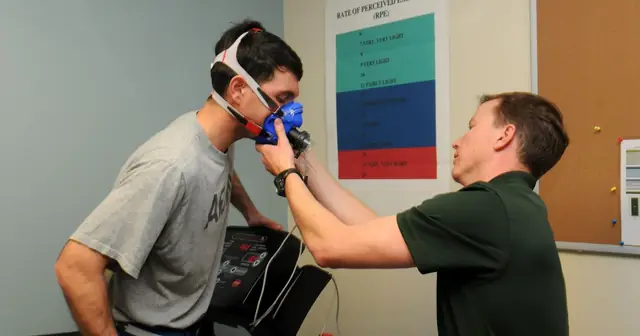
Beta blockers cap HR; RPE scales (6–20) and talk test supplement zones. ACE inhibitors and diuretics affect heat tolerance on treadmills—increase fan airflow and hydrate. Always disclose new exercise programs to your prescriber, especially with stents, arrhythmias, or recent cardiac events.
Social and adherence factors
Train with a partner or class for accountability. Use the app's audio cues if balance or vision makes screen-checking awkward on treadmills. Celebrate consistency over hero intervals—two quality sessions weekly for a year beat six unsustainable weeks. Link motivation to age-adjusted VO₂ goals and expected timelines, not young-adult benchmarks.
Warning signs to stop and seek care
Chest pain, unusual shortness of breath disproportionate to effort, dizziness, or palpitations warrant stopping immediately and contacting a clinician. Mild muscle soreness and elevated breathing during hard intervals are expected; sharp joint pain is not. When in doubt after cardiac history, choose supervised cardiac rehab or physician-monitored testing before unsupervised HIIT.
Community and coaching cues
Many adults over 50 thrive in small group HIIT classes with coaches who know HR monitoring. If training solo, use the app's audio prompts to avoid staring at a wrist screen on the treadmill. Tell a family member your workout schedule—simple safety practice at any age. Progress photos and interval logs motivate through plateaus when mirror changes lag behind VO₂ max improvements.
Bone density and balance
High-impact running is not mandatory for 4x4—bike, rower, and incline walk still load the cardiovascular system. Pair interval training with twice-weekly resistance work for bone health, especially post-menopause. Single-leg balance drills reduce fall risk as agility improves alongside VO₂ max. Discuss osteoporosis history with your doctor before adding impact running.
Long-term adherence mindset
Decades of fitness come from repeatable routines, not single heroic months. Two weekly 4x4 sessions maintained for a year beat eight unsustainable weeks followed by six months off. Anchor sessions to fixed calendar slots—Tuesday and Saturday morning, for example—and treat them like medical appointments you rarely cancel.
Warm-ups lengthen slightly with age: budget 12–15 minutes before first work interval when joints feel stiff. Dynamic leg swings, gentle marching, and progressive incline walking reduce injury risk without diluting the main stimulus of the four hard minutes.
Family and social support
Share goals with partners or adult children—they may join easy walks on recovery days while you keep 4x4 for solo focused sessions. Social support improves adherence in every age cohort; isolation predicts dropout when intervals feel uncomfortable in weeks 2–3.
Annual physicals are a good time to discuss interval training with your physician. Bring a printout of average work and recovery HR from recent 4x4 sessions—it gives concrete data beyond "I exercise sometimes."
Flexibility and mobility work on rest days supports interval quality without adding intensity. Ten minutes of hip and ankle mobility before treadmill 4x4 reduces compensatory patterns that aggravate knees and lower back during incline walking. Consistency beats intensity spikes every time.
Strength days around HIIT
Separate heavy leg days from hard 4x4 when possible—same-day legs plus intervals increases fall and dizziness risk on tired muscles. If schedules force combination days, do strength first with moderate loads, then shorter 4x4 (fewer work bouts) rather than skipping recovery intervals. This sequencing keeps heart stress high without turning the session into a glycogen-depleted stumble.
Ready to train safely after 50? Download the Norwegian 4x4 Protocol App for guided 4-minute intervals, heart-rate zones, and progress tracking. Get the app, see how it works, or start with our beginner's guide.
Frequently Asked Questions
Is HIIT safe for seniors?
Often yes with medical clearance and gradual progression. Modified 2–3 minute work bouts build toward full 4x4.
How often should over-50 adults do 4x4?
Start 2× weekly; add a third session only with good recovery and provider approval.
Treadmill or outdoor for HIIT after 50?
Treadmill incline walking offers controlled intensity and softer impact for many older trainees.
What if I have heart disease?
Get explicit medical guidance. Some patients benefit from cardiac rehab protocols before unsupervised HIIT.
Published · Last updated
Share this article