On this page
Every year has its fitness vocabulary. In 2026 it was rucking, fibermaxxing, Hyrox, "lift heavy", exercise snacks and VO₂ max. The names behind it were familiar: Peter Attia, Rhonda Patrick, Stacy Sims, Mary Claire Haver, and the data teams at Strava and Garmin. The 2027 forecasts are already out too.
This guide covers both years: who said what, which buzzwords have evidence behind them, and which are just noise. Then it does the useful part. Thanksgiving is Thursday, November 26, and Christmas is a Friday this year. Below is a six-week plan to get you to January 1 as fit as you are today, maybe fitter, without skipping a single dinner.
The short version
- Wearables are still No. 1. ACSM ranked them top in both its 2026 and 2027 surveys. People want a workout that moves a number.
- Strength and Pilates keep growing. Garmin users logged 29% more strength sessions and 46% more Pilates in 2025.
- Fitness got social. Run clubs nearly quadrupled on Strava, and Hyrox is heading for 2 million athletes.
- Longevity is the story. VO₂ max and muscle are now discussed as health markers, not gym stats.
- For the holidays: the average person gains less than a pound, but rarely loses it. Keep one hard session a week, walk after big meals and protect your sleep.
2026: the year in names and numbers
Wearables, and the urge to measure everything
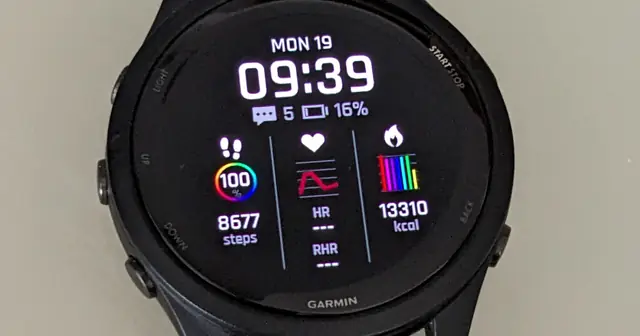
The American College of Sports Medicine (ACSM) surveyed about 2,000 professionals for its 2026 list and put wearable technology first again, ahead of fitness for older adults, exercise for weight management and mobile apps. Apple Watch, Garmin, Whoop and Oura now all show a VO₂ max estimate or a recovery score. That is why so many people went looking for a workout that would raise the number. How far to trust the estimate is a separate question: see is your watch's VO₂ max accurate?
Strength training became the default, especially for women
The 2025 Garmin Connect data report showed strength training up 29%, its fourth straight year above 20%. Women logged 6% more strength sessions than men. The loudest voice here was Dr. Stacy Sims, whose line "lift heavy" became the slogan for women in perimenopause and menopause. She recommends sets of 3–6 reps at a weight you can only just move with good form. Dr. Mary Claire Haver, the menopause physician, made the weighted vest a talking point by wearing one herself.
Pilates kept its crown
ClassPass reported Pilates as its most-booked workout for the third year running, and Garmin logged Pilates sessions up 46%. Reformer classes are booked out in most cities. The appeal is low impact, control and core strength, which ACSM files under "balance, flow and core strength", No. 3 for 2027.
Rucking and weighted vests
Walking with weight, in a backpack (rucking) or a vest, was everywhere on TikTok and in gyms. A March 2026 Healio report called weighted vests "the trend of the moment" and was careful about the evidence: they add load to walking, but the bone-density benefits people claim are not proven yet. A fair summary is that rucking turns a walk into a moderate workout. It does not replace lifting or intervals.
Run clubs, Hyrox and fitness as a social life
Strava's Year in Sport report said new clubs on the platform nearly quadrupled, with running clubs up 3.5×. Its headline, "doomscrolling is out, movement is in", came from Gen Z: 39% said they exercise to meet people. Strava CEO Michael Martin said more than half of Gen Z planned to use Strava more in 2026, and Instagram and TikTok the same or less.
Hyrox, the indoor fitness race of 8 km of running mixed with 8 workout stations, had its biggest season yet, with an estimated 1.3–1.5 million participants in 2025/26. New York alone grew from 15,000 to 50,000 athletes in a year. The 2026/27 season plans 107 race weekends and more than 2 million athletes, ending with the World Championships in Hong Kong in June 2027. If you are training for one, the 4x4 builds the engine: see our Hyrox plan for beginners.
VO₂ max as a longevity number
Dr. Peter Attia made VO₂ max dinner-table talk with his "Centenarian Decathlon" idea: train now for the things you want to do at 90. His four pillars are stability, strength, Zone 2 and VO₂ max work. Dr. Rhonda Patrick went further on Huberman Lab in March 2026, calling cardiorespiratory fitness one of the strongest predictors of longevity and naming HIIT and resistance training as the two levers. She had already named the Norwegian 4x4 on The Tim Ferriss Show. Read Rhonda Patrick on HIIT and longevity and Peter Attia on VO₂ max.
GLP-1 pills arrived, and "protect your muscle" came with them
The Wegovy pill (oral semaglutide) was approved in December 2025 and launched in January 2026. Eli Lilly's orforglipron, sold as Foundayo, followed on April 1, 2026. Pills make these drugs available to many more people, and the fitness conversation moved with them: when you eat less, you need strength training and enough protein to avoid losing muscle along with fat. Our guide covers it: prevent muscle loss on Ozempic and GLP-1s.
"Eat real food", protein and the "maxxing" era
The new Dietary Guidelines for Americans 2025–2030 came out on January 7, 2026. HHS Secretary Robert F. Kennedy Jr. summed them up as "eat real food", and the protein target rose to 1.2–1.6 g per kg of body weight per day. Harvard's Nutrition Source welcomed the push against added sugar but warned about "protein hype", since many Americans already eat enough.
Online, the word of the year was "maxxing": proteinmaxxing, then fibermaxxing, then sleepmaxxing. PepsiCo's CEO said fiber would be "the next protein." The fiber part is worth taking seriously: more than 90% of US women and 97% of men fall short of the 22–34 g a day the guidelines recommend. Just add it slowly, or your gut will complain. Sleepmaxxing (mouth tape, gadgets, ten-step routines) has much less behind it. A Stanford sleep specialist told CNN that many of the tricks seem to work for a while and then fade, because sleep is highly sensitive to the placebo effect.
Exercise snacks and Japanese walking
Short, hard bursts kept gaining respect. The VILPA study (Stamatakis et al., Nature Medicine, 2022) followed 25,241 non-exercisers wearing activity trackers. Three 1–2 minute bursts of vigorous everyday activity a day, like taking stairs fast or hurrying for a bus, were linked to about 40% lower all-cause mortality. It is observational, but it changed the message from "find an hour" to "find a minute". Japanese walking (alternating 3 minutes brisk and 3 minutes easy) was 2026's gentlest viral interval workout: here's how it compares to the 4x4.
Trendy words of 2026, decoded
| Buzzword | What it means | Worth it? |
|---|---|---|
| Rucking | Walking with a weighted backpack | Yes, as a walk upgrade |
| Fibermaxxing | Deliberately eating more fiber | Yes, go slowly |
| Proteinmaxxing | Protein at every meal, often from powders and bars | Up to a point |
| Sleepmaxxing | Gadgets and rituals for "perfect" sleep | Basics yes, gadgets mostly no |
| Exercise snacks / VILPA | 1–2 minute bursts of hard effort | Yes, especially when busy |
| Zone 2 | Easy cardio where you can still talk | Yes, as the base |
| VO₂ max | Your maximal aerobic capacity | Yes, a strong health marker |
| Hyrox | Indoor running-plus-stations race | Fun goal, needs an engine |
| Lift heavy | Low reps, heavy weights, especially in midlife | Yes, build up to it |
| Cozy cardio | Low-pressure home workouts with candles and comfort | Yes, if it gets you moving |
2027: what's coming next
ACSM's 2027 survey, published October 20, 2026, gives the clearest view:
- Wearable technology (No. 1 for the 10th time)
- Mobile exercise apps
- Balance, flow and core strength
- Fitness programs for older adults
- Traditional strength training
- Exercise for weight management
- Group fitness classes (up six places)
- Data-driven training technology
- Exercise for mental health
- Influencer- and ambassador-led programs (new in the top 10)
HIIT sits at No. 12. That is not because it stopped working. Generic "HIIT" has been replaced by specific, named protocols with a target. We break down the full list in fitness trends 2027 for HIIT and the 4x4.
Five things to watch in 2027:
- Fitness racing goes mainstream. Hyrox at 2 million athletes, plus copycat formats in every big gym chain.
- Group training is back. Group fitness up six places in one year matches what Strava saw with clubs. People want to train with other people.
- Training for a longer life. Older-adult programs have been in ACSM's top 5 for five years running. Expect more talk of "healthspan", grip strength and VO₂ max for 60-year-olds. Our guide: is HIIT safe after 50?
- Exercise alongside GLP-1s. With cheaper pills, "GLP-1 companion" programs focused on strength and protein will keep growing.
- Influencers, with caution. Influencer-led programs entered ACSM's top 10. The useful filter is simple: does the advice point to a study, and does it tell you how hard to work?
Holiday survival guide: Thanksgiving to New Year's
The holiday weight myth, and the real problem
The often-quoted "5 to 10 pounds over the holidays" is a myth. When researchers at the National Institutes of Health actually weighed 195 adults (Yanovski et al., NEJM, 2000), the average gain from Thanksgiving to New Year's was 0.37 kg (0.8 lb). Fewer than 10% gained more than 5 lb. The problem is what happened next: most people did not lose it again, and the holiday gain made up about half of their weight gain for the whole year. A 2016 study of about 3,000 people in the US, Germany and Japan found the same pattern around Christmas, with about half of the gain still there months later.
So the goal is not to "burn off" a dinner. It is to stop six weeks from adding a pound you keep for a decade.
Thanksgiving: start the day moving
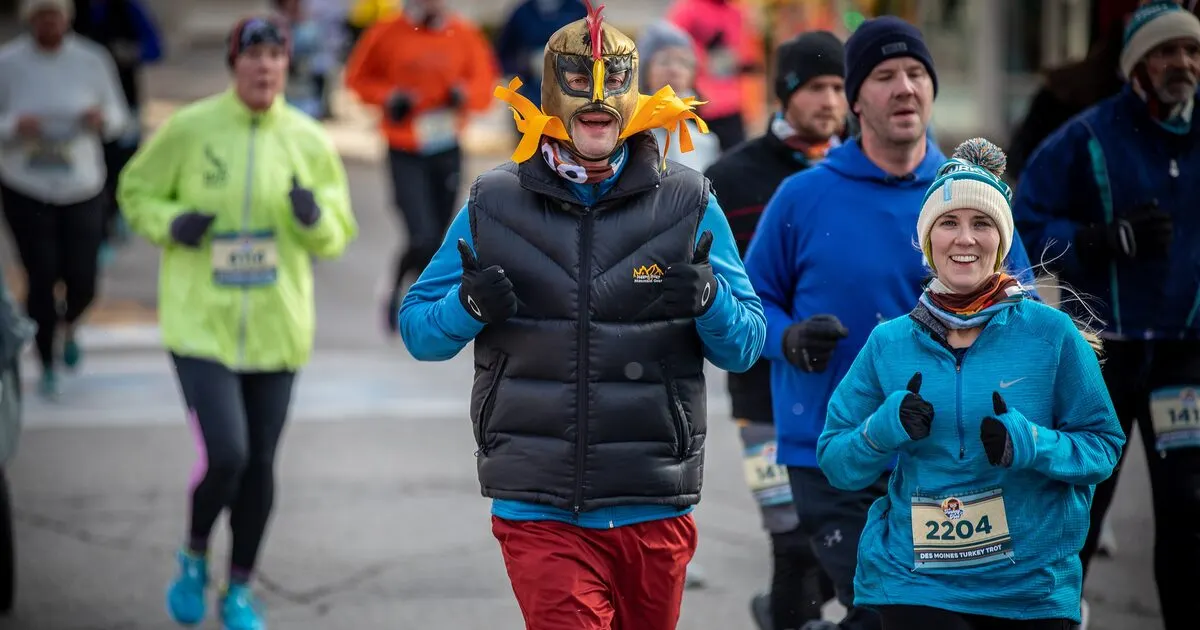
Thanksgiving Day is the biggest running day of the year in the US. RunSignup counted a record 1.33 million Turkey Trot registrations across 1,056 races in 2025, up 20% on the year before. A 5K Turkey Trot makes a good hard effort and a family tradition.
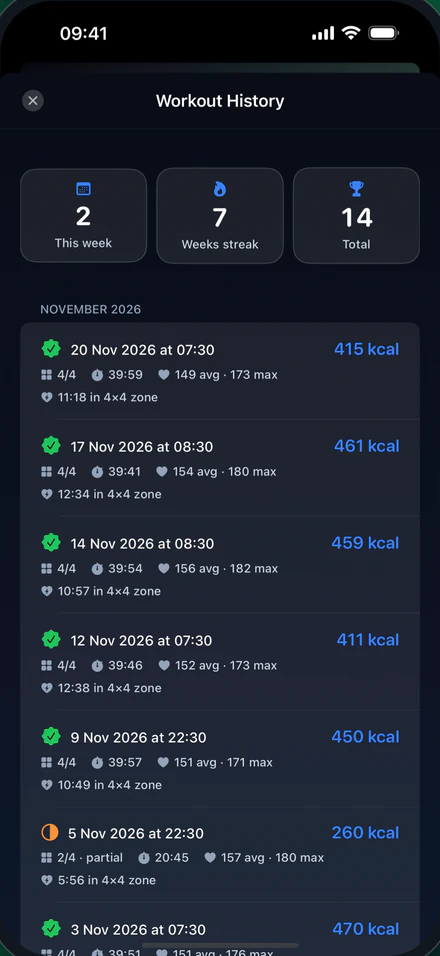
Not racing? Do a Norwegian 4x4 in the morning. Ten minutes warm-up, four 4-minute intervals at 85–95% of max heart rate with 3-minute recoveries, five minutes cool-down. It is done in about 40 minutes, before the oven is even warm. Use our free interval timer if you are away from your usual setup.
The post-dinner walk is the best trick you have
Of all the holiday advice, this one has the best evidence. A 2023 meta-analysis in Sports Medicine, titled "After Dinner Rest a While, After Supper Walk a Mile?", found that exercise after a meal lowers the blood-sugar spike more than exercise before it, and that walking works best when you start as soon as possible after eating. Even light walking breaks reduce glucose compared with sitting (Buffey et al., 2022).
So walk for 10–15 minutes after the big meal. Take the whole table if you can. It is also the easiest way to get a break from that one relative.
Christmas: the heart needs a calmer December
A large Swedish registry study (SWEDEHEART, BMJ, 2018) looked at 283,014 heart attacks over 16 years. Risk was 37% higher on Christmas Eve, peaking around 10 p.m., and highest in people over 75 and those with diabetes or heart disease. The study shows an association, not a cause, and the authors pointed to emotional stress, heavy meals, alcohol and travel.
Doctors also use the term "holiday heart syndrome" for irregular heart rhythms, often atrial fibrillation, after heavy drinking. The practical points: keep taking your medications while travelling, space out drinks with water, and don't sit out chest pain or a racing heartbeat because "it's Christmas". If you have a heart condition, ask your doctor before starting hard intervals. Our heart health guide explains how intervals strengthen the heart over time.
Protect intensity, not volume
You do not need to train as much in December. You need to keep some training hard. Classic detraining studies by Robert Hickson and colleagues in the early 1980s found that VO₂ max held steady for weeks when people cut training frequency or duration by up to two-thirds, as long as intensity stayed high. When intensity dropped, fitness dropped.
For the 4x4, that means one session a week is enough to hold your VO₂ max through the holidays. Two is a bonus. Add two short strength sessions to protect muscle, and walk every day you can.
Sleep and alcohol beat any single meal
One large dinner does little. Five short nights and a week of nightcaps do much more: worse heart-rate variability, higher resting heart rate, worse food choices and skipped workouts. If your watch tracks HRV, December is when you will see it drop. Our HRV guide explains what the number means.
Simple rules: alternate every drink with water, stop drinking two to three hours before bed, and keep your wake-up time within an hour of normal, even on days off. And yes, "sober curious" and Dry January are trends too, but you don't have to wait until January.
Travel workouts that need no gym
- Stair 4x4: four hard 4-minute blocks up and down a stairwell or hill, walking down to recover.
- Hotel room circuit: squats, push-ups, split squats and planks, 40 seconds on, 20 seconds off, for 15 minutes.
- Exercise snacks: three 1–2 minute bursts a day, like fast stairs or a brisk uphill walk.
- Family ruck: a backpack with a few water bottles turns a family walk into a workout.
Your six-week holiday plan
| Week | Hard session | Strength | Daily habit |
|---|---|---|---|
| Nov 23–29 (Thanksgiving) | Turkey Trot or 4x4 on Thursday morning | 2 × 20 min | Walk after dinner |
| Nov 30–Dec 6 | 1–2 × 4x4 | 2 × 20 min | Protein at breakfast |
| Dec 7–13 (party season) | 1 × 4x4 | 2 × 20 min | Water between drinks |
| Dec 14–20 | 1–2 × 4x4 | 2 × 20 min | Same wake-up time |
| Dec 21–27 (Christmas) | 1 × 4x4 or stair 4x4 | 1–2 × 15 min | Family walk after meals |
| Dec 28–Jan 3 | 1 × 4x4 | 2 × 20 min | Plan January |
Then start fresh on Monday, January 4, 2027 with our 12-week Norwegian 4x4 plan for 2027, or generate your own with the free plan generator.
Take care of yourself, not just your fitness
ACSM ranked exercise for mental health in its top 10 for both 2026 and 2027, and December is when it matters most. The holidays bring travel, money pressure, family tension and short days. A hard interval session is one of the most reliable mood resets there is. Twenty-five minutes of work and you come back calmer.
Some days the best workout is a long walk with someone you haven't seen in a year. Some days it's saying no to a third party to get a full night's sleep. Neither shows up on your watch, and both count. For more, read mindful movement for mental wellness and our guide to recovery.
The trends will change again next year. What stays the same: move most days, train hard once or twice a week, lift something heavy, sleep, and enjoy the meal.
Frequently Asked Questions
What are the biggest fitness trends of 2026?
Wearable technology (No. 1 in ACSM's 2026 survey), strength training, Pilates, rucking and weighted vests, Hyrox and run clubs, VO₂ max as a longevity number, and exercise to protect muscle on GLP-1 drugs. Online, the buzzwords were "maxxing" (protein, fiber, sleep), "exercise snacks" and "Zone 2".
What fitness trends are predicted for 2027?
ACSM's 2027 survey puts wearables first again, followed by mobile exercise apps, balance, flow and core strength, programs for older adults and traditional strength training. Group fitness jumped six places to No. 7 and influencer-led programs entered the top 10. Hyrox is targeting more than 2 million athletes in its 2026/27 season.
How much weight do people really gain over the holidays?
Less than the myth. A study in the New England Journal of Medicine (Yanovski et al., 2000) measured an average gain of about 0.37 kg (0.8 lb) from Thanksgiving to New Year's, and fewer than 10% gained more than 5 lb. The catch is that most people did not lose it again afterwards.
How can I stay fit over Thanksgiving and Christmas?
Protect intensity, not volume. One Norwegian 4x4 session a week, two short strength sessions and a 10–15 minute walk after big meals will hold most of your fitness. Sleep and alcohol matter more than any single meal.
Is it worth doing a Turkey Trot?
Yes, if you enjoy it. Thanksgiving is the biggest running day of the year in the US: RunSignup counted a record 1.33 million registrations across 1,056 races in 2025. A 5K is a fine hard effort, and it moves you before the biggest meal of the year.
Can I do the Norwegian 4x4 on Thanksgiving or Christmas morning?
Yes. The session takes about 40 minutes including warm-up and cool-down, so it fits before guests arrive. Go easy the day after a late night or heavy drinking, and skip it if you feel unwell.
Published
Share this article